ACL Prehab Sydney | Pre-Surgery Rehab | SportsFit Health & Rehab
ACL Prehabilitation · Five Dock & Gladesville

Better In,
Better Out.

What you do before surgery determines how quickly you get back to sport after it.

If you've torn your ACL and surgery is booked, the weeks between your injury and the operating table are some of the most valuable in your entire recovery. A structured prehab program — building strength, restoring range of motion, and reducing swelling before you go under — translates directly into faster, more complete outcomes post-op.

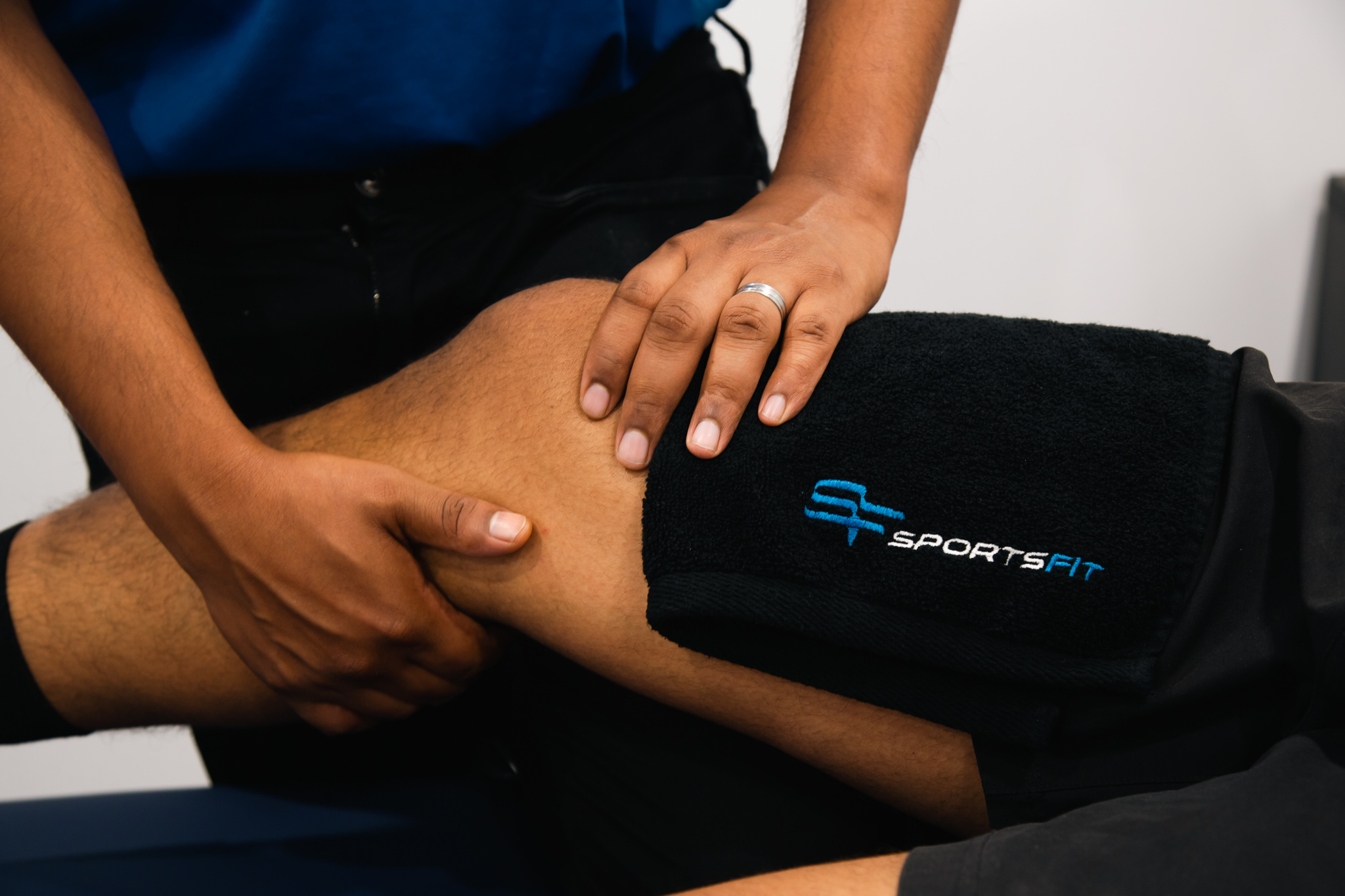
SportsFit physio working with ACL patient

Kevin Wong — Senior Physiotherapist & Exercise Physiologist

46
Weeks of prehab shown to improve early post-op strength and motion
<10%
Limb symmetry deficit we aim for before your surgery date
6yr
Improvements from prehab maintained up to 6 years post-surgery
Book a Prehab Assessment
AXIT Force Plates
VALD ForceFrame
NRL Club Experience
10 Clinicians
Five Dock & Gladesville
Why Prehab Matters

The Case for Doing the Work Now

Surgery creates a predictable pattern of muscle loss — particularly the quadriceps. The stronger you go in, the less ground you lose, and the faster you gain it back.

💪
Beat the Atrophy You Can't Avoid

Quadriceps strength can drop by more than 20% in the first six months after ACLR. Building a larger base before surgery means you start post-op rehab with more to work with — and reach key milestones sooner.

⚖️
Get Limb Symmetry Before the Cut

We target less than a 10% strength deficit between legs before surgery. Research consistently links better pre-op limb symmetry index (LSI) scores to faster return to sport and lower re-injury risk post-op.

🦵
Strengthen the Donor Site

Your graft — whether hamstring or quadriceps tendon — comes from somewhere. We work specifically on strengthening donor site tissue and the surrounding structures so harvest site morbidity is minimised.

📐
Full Extension Before Surgery

Achieving full knee extension before the operation is critical. Going into surgery with a flexion contracture significantly increases the risk of stiffness and arthrofibrosis post-op — a complication that can derail your entire recovery.

🧠
Neuromuscular Re-Education

ACL injury disrupts the sensory feedback your knee sends to your brain. Prehab retrains proprioception and neuromuscular control — patterns that carry directly over to your post-op recovery phase.

📈
Better Outcomes, Longer Term

The research is consistent: patients who complete structured prehab score significantly higher on knee function tests at 2 years post-surgery than those who go straight to the operating table.

The Evidence

What the Research Says

"Patients who complete prehabilitation may manifest improvements for up to 6 years postoperatively compared to those who do not complete a preoperative exercise routine — across knee-related strength, range of motion, function, and outcome scores."

4–6 wks

Even a short prehab block of 4–6 weeks significantly improves early to mid-term post-op strength, range of motion, and return-to-sport timing. Prehab groups showed measurably higher single-leg hop scores at 3 months post-surgery.

≥90%

Athletes who achieved ≥90% quadriceps limb symmetry index before return to sport had a 5.6% re-injury rate. Those who failed RTS criteria had a 38.2% re-injury rate — nearly 7x higher.

2× odds

Higher inter-limb symmetry on hop tests was associated with approximately twice the odds of successfully returning to sport within 1–3 years following ACLR.

70 → 84

Prehab groups scored 70 points on the IKDC at baseline vs 50 for controls — and maintained that advantage at 2 years post-surgery (84 vs 71). The difference exceeded the threshold for minimal detectable change.

Our Prehab Program

What We Work on Before Your Surgery

Every prehab program at SportsFit is built around your surgery date, your graft type, and your current function. Here's how we structure it.

Pre-Surgery Targets We're Chasing

Full passive knee extension — matching the unaffected side
Quadriceps strength LSI ≥90% (or as close as the timeline allows)
Knee effusion resolved or minimal before surgery date
Hamstring and hip strength base — protecting the donor site
Normal gait pattern — no antalgic compensation patterns
Single-leg balance and proprioception baseline established
01
Week 1–2 · Settle the Knee

Reduce Swelling, Restore Extension

The immediate priority after ACL injury is getting the knee calm. Swelling inhibits the quadriceps neurologically — arthrogenic muscle inhibition means your quad simply won't fire properly until effusion is controlled. We use manual therapy, targeted isometrics, and extension work to restore range and kick-start quad activation.

  • Ice and compression protocols to manage post-injury effusion
  • Passive and active extension exercises to eliminate any extension lag
  • Isometric quad sets and straight-leg raises to maintain early quad tone
  • Neuromuscular electrical stimulation (NMES) where indicated
02
Week 2–4 · Build the Base

Progressive Strength & Symmetry

Once the knee is calm and extension is full, we move into progressive loading. The goal is building quadriceps and hamstring volume — maximising muscle bulk before surgery so post-op atrophy takes you back to functional, not zero. We track limb symmetry with our AXIT force plates at regular intervals.

  • Bilateral to unilateral leg press progression
  • Hamstring and glute loading — with focus on the specific donor site (hamstring or quad tendon)
  • Step-downs and single-leg work to close the LSI gap
  • Hip and calf strength to support overall lower limb function
  • Regular force plate assessments to track left-right symmetry
Sled push exercise during ACL prehab at SportsFit
Progressive strength work — building the base before surgery
03
Week 3–6 · Function & Neuromuscular Control

Proprioception, Balance & Pattern Work

Strength alone isn't enough. The ACL is a key proprioceptive organ, and its injury disrupts the sensory feedback loop between your knee and your brain. We rebuild neuromuscular control patterns now — so they carry forward into your post-op rehab rather than needing to be developed from scratch.

  • Single-leg balance and perturbation training
  • Functional movements: lunges, step-ups, lateral work
  • Gait retraining to normalise walking pattern before surgery
  • Anti-gravity treadmill running where appropriate and timeline allows
  • Sport-specific drills for athletes where surgery timing permits
04
Pre-Surgery Week · Final Assessment

Pre-Op Testing & Surgery Prep

In the week before surgery, we run a final assessment using our force plates and functional hop tests. This gives us your pre-op baseline — a benchmark your post-op team uses to track recovery progress and time your return-to-sport clearance. We also run through what to expect from Day 1 post-surgery so you're not going in blind.

  • Full force plate strength assessment — quad and hamstring LSI documented
  • Single-leg hop test baseline recorded
  • Post-op rehab roadmap discussion and goal-setting
  • Education on immediate post-op priorities: quad activation, extension, swelling
Timing Your Prehab

When Should You Start?

The honest answer: as soon as possible. Even a few weeks of structured prehab moves the needle. Here's what different timelines typically look like.

1–2 WEEKS

Short runway — still worth it

Even 1–2 weeks of focused prehab makes a meaningful difference. The priority is resolving swelling, achieving full extension, and establishing baseline quad activation before surgery. This gives your post-op physio a much better starting point.

4–6 WEEKS

The sweet spot

The research strongly supports 4–6 weeks as the optimal prehab window. You have enough time to meaningfully improve quad strength, close the limb symmetry gap, and rebuild neuromuscular control — all of which translate directly into better post-op outcomes.

6–12 WEEKS

Extended window — maximise it

If your surgery is delayed or you've chosen to prehab for an extended period, we build progressively toward strength targets that are typically post-op milestones. The stronger and more symmetrical you are going in, the more insurance you have against post-op setbacks.

NO DATE YET

Still waiting on a surgeon? Start now.

Waiting lists are a reality. Don't let the gap between injury and surgery be wasted. We'll start your prehab program immediately so you're in the best possible shape whenever that surgery date lands — whether it's 6 weeks or 6 months away.

Who This Is For

Is This Right for You?

Our ACL prehab program suits anyone heading into ACL reconstruction surgery. The sport, age, and fitness level don't matter — the principles are the same.

🏈
Team Sport Athletes

Football, rugby, netball, basketball — sports with high pivot and contact demands. Getting back to your team and your level is the goal, and prehab sets the foundation for that outcome.

🏃
Runners & Individual Sport Athletes

Returning to running, cycling, swimming, or individual competition. Your rehab needs may differ slightly from team sport athletes — we program accordingly.

🏋️
Gym & CrossFit Athletes

Already training regularly and want to stay as active as possible before surgery. We'll work around what you can load safely, and keep you moving in the gym throughout prehab.

🧑‍💼
Non-Athletes Who Want Full Recovery

You don't need to play sport to benefit from prehab. If your goal is getting back to work, walking without pain, or long-term knee health — prehab improves outcomes for everyone.

Common Questions

FAQ

Is it safe to exercise on a torn ACL before surgery?

In most cases, yes — with appropriate guidance. We don't put you into pivoting or cutting movements, but strengthening, range of motion work, and neuromuscular training are safe and important. Every patient is assessed individually, and your program is designed around your current level of stability and pain.

I've only got 2 weeks before surgery. Is it still worth coming in?

Yes. Even in a short window, restoring full extension, controlling swelling, and getting quad activation firing properly will give your post-op physio a much better starting point. Two weeks of good prehab beats two weeks of rest every time.

What if I'm still waiting on a surgery date?

Start now. Waiting lists can stretch to months, and that time doesn't have to be wasted. We'll run a full assessment and start your program immediately — adjusting progressively as your surgery date firms up.

How often do I need to come in?

Most prehab programs run 2–3 sessions per week with our physio team, supported by a structured home or gym program between sessions. Frequency is adjusted depending on your timeline and how quickly you're progressing.

Will you communicate with my surgeon?

Absolutely. We can liaise directly with your surgeon's team to ensure your prehab program is aligned with their surgical plan, graft choice, and post-op protocol. A coordinated approach gives you the best outcome.

Do I need a referral?

No referral is needed to book a prehab assessment. If you have imaging (MRI), bring it along — it's helpful but not required to get started.